Ambassador Visits “The Japan–Solomon Islands Malaria Reduction Project” sites
2026/3/27
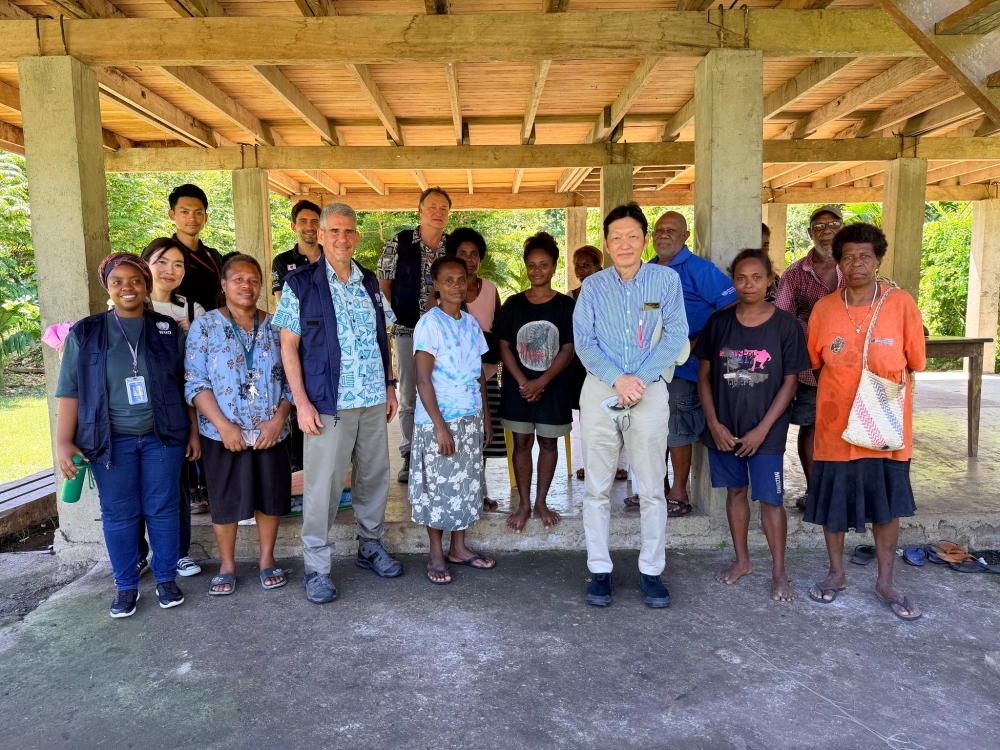
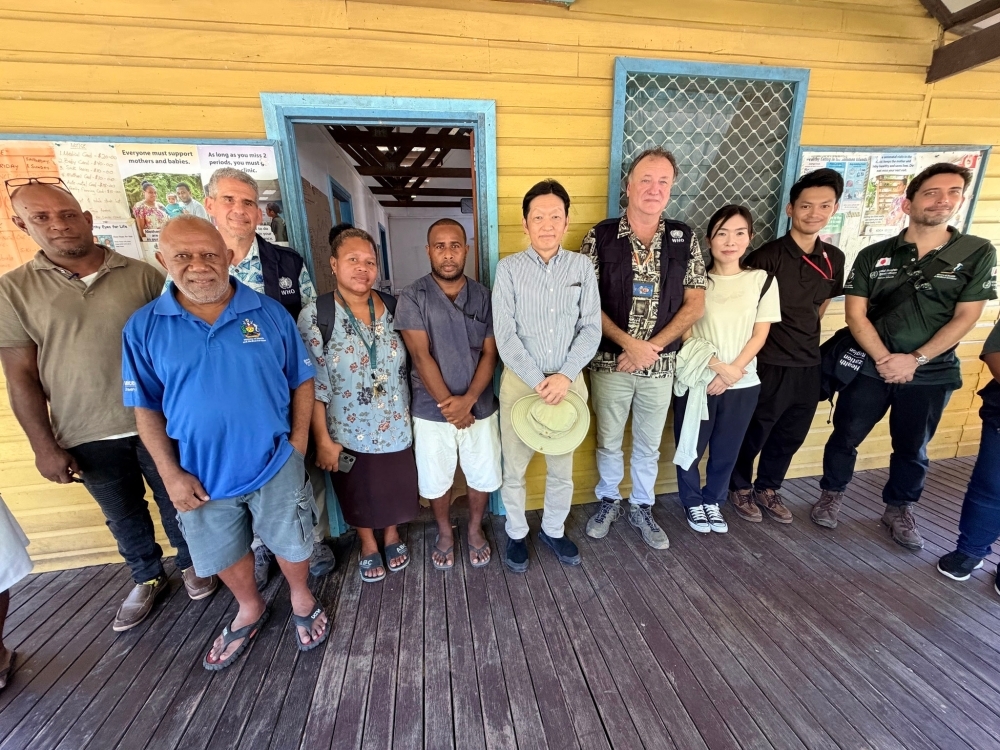
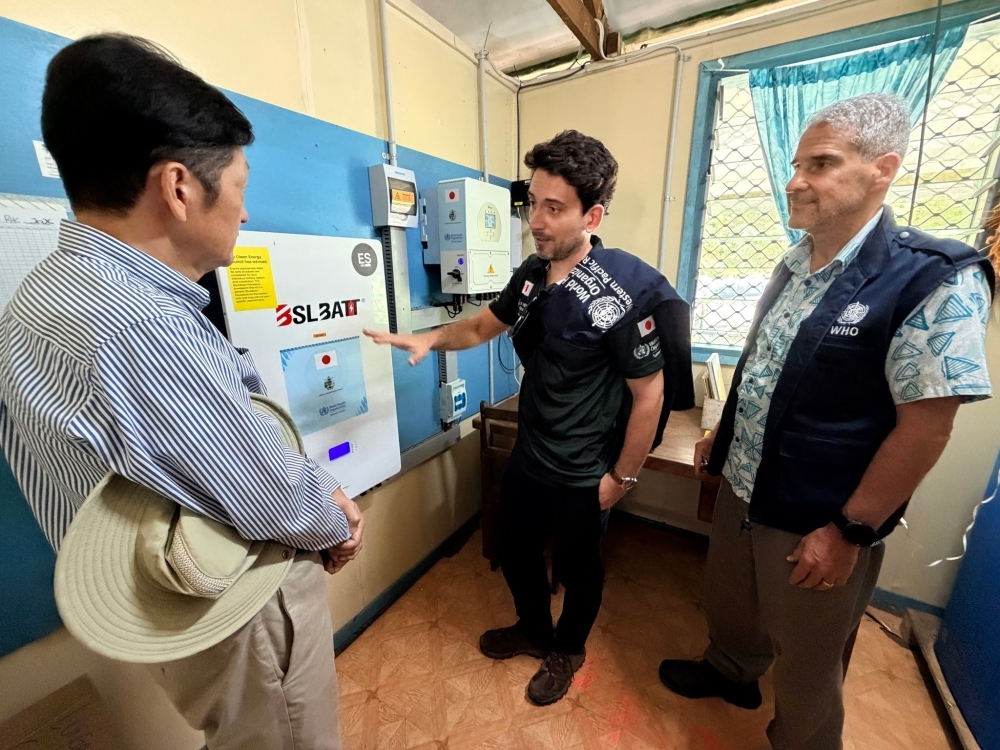
On 27th March, Ambassador HIGUCHI visited Pao and Vura communities, and Lunga Health Clinic to observe The Japan–Solomon Islands Malaria Reduction Project, a collaborative project between the Ministry of Health and Medical Services (MHMS), the Government of Japan and the World Health Organization (WHO).
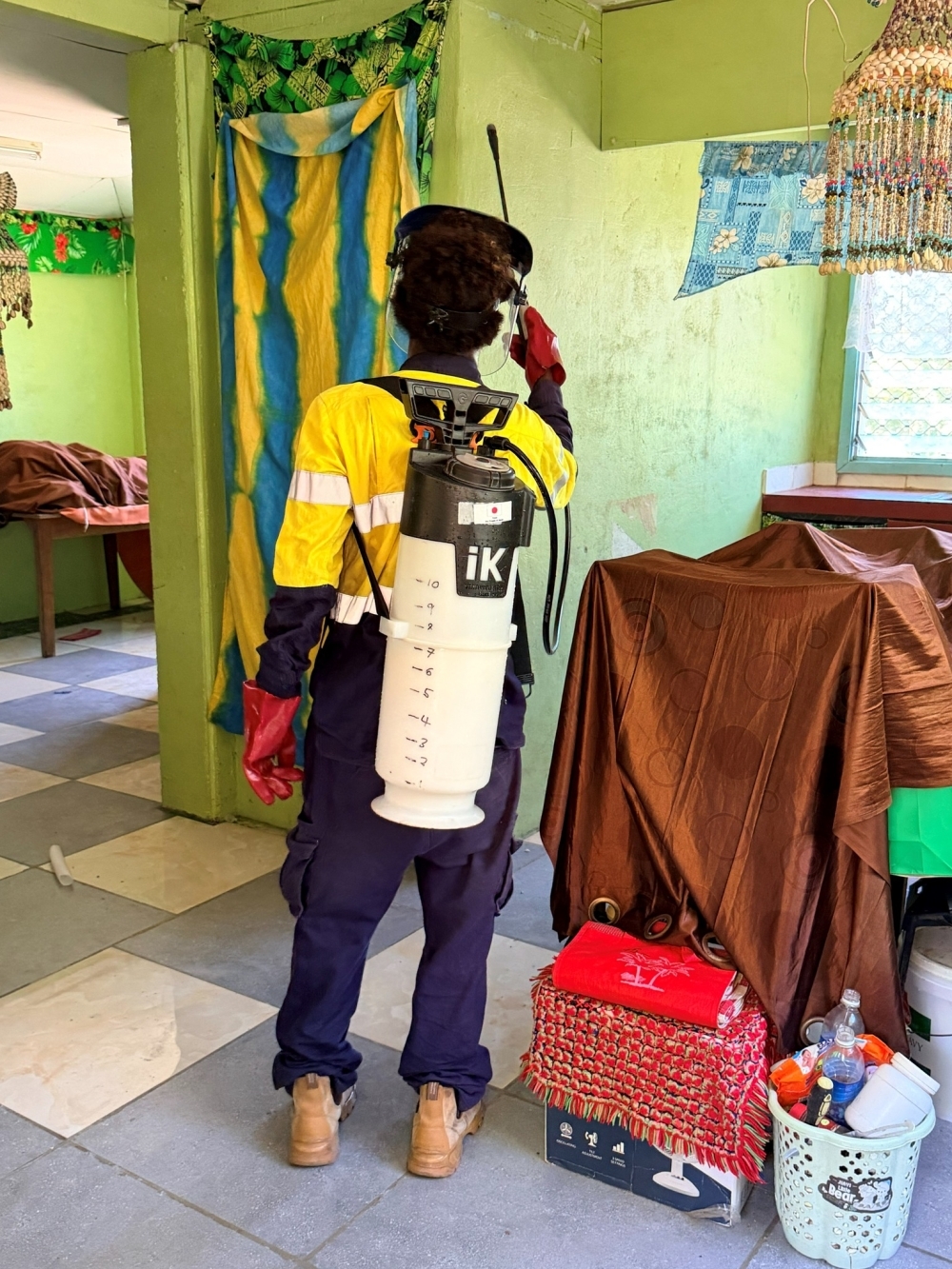
This project implements modern malaria control strategies combining real-time digital surveillance, improved Plasmodium vivax case management, targeted indoor residual spraying, and locally driven operational research.
The project was responsible for spraying 800 households this year, and the results showed a promising decline in the most lethal form of malaria (Plasmodium falciparum) from 44% in 2023 to 31% in February 2026.
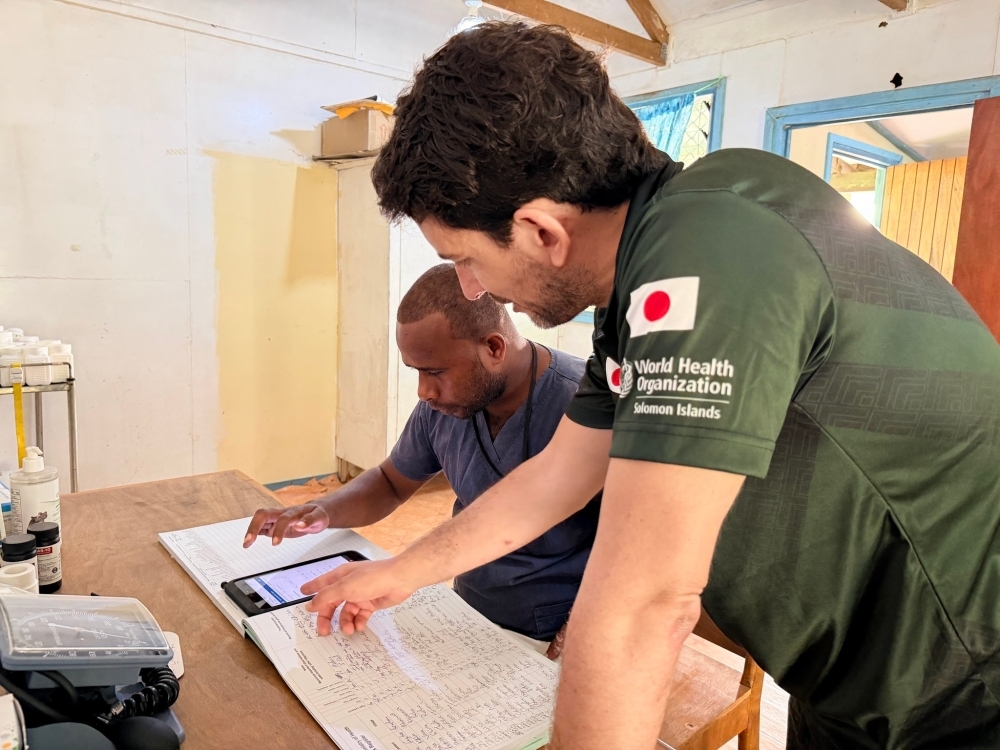
Also, the project has transformed malaria reporting by shifting from paper-based systems to digital platforms using DHIS2, supported by solar power systems and Starlink satellite connectivity in remote health facilities. Forty computer tablets have been deployed to enable rapid, reliable data collection, which is essential for identifying transmission hotspots.
Reacting to positive feedback from health workers and communities, Ambassador HIGUCHI said, “I wanted to thank you for giving me this positive feedback. That resources are put to good use in Guadalcanal, or even across the greater Solomon Islands, because seeing this firsthand, I’m convinced this serves as a good practice that can lead to wider use both in Solomon Islands and the rest of the Pacific.”
The project includes a research partnership between the Solomon Islands National University and the University of Kyoto to evaluate the combined effect of long-lasting insecticidal nets and targeted indoor residual spraying.
This project implements modern malaria control strategies combining real-time digital surveillance, improved Plasmodium vivax case management, targeted indoor residual spraying, and locally driven operational research.
The project was responsible for spraying 800 households this year, and the results showed a promising decline in the most lethal form of malaria (Plasmodium falciparum) from 44% in 2023 to 31% in February 2026.
Also, the project has transformed malaria reporting by shifting from paper-based systems to digital platforms using DHIS2, supported by solar power systems and Starlink satellite connectivity in remote health facilities. Forty computer tablets have been deployed to enable rapid, reliable data collection, which is essential for identifying transmission hotspots.
Reacting to positive feedback from health workers and communities, Ambassador HIGUCHI said, “I wanted to thank you for giving me this positive feedback. That resources are put to good use in Guadalcanal, or even across the greater Solomon Islands, because seeing this firsthand, I’m convinced this serves as a good practice that can lead to wider use both in Solomon Islands and the rest of the Pacific.”
The project includes a research partnership between the Solomon Islands National University and the University of Kyoto to evaluate the combined effect of long-lasting insecticidal nets and targeted indoor residual spraying.